
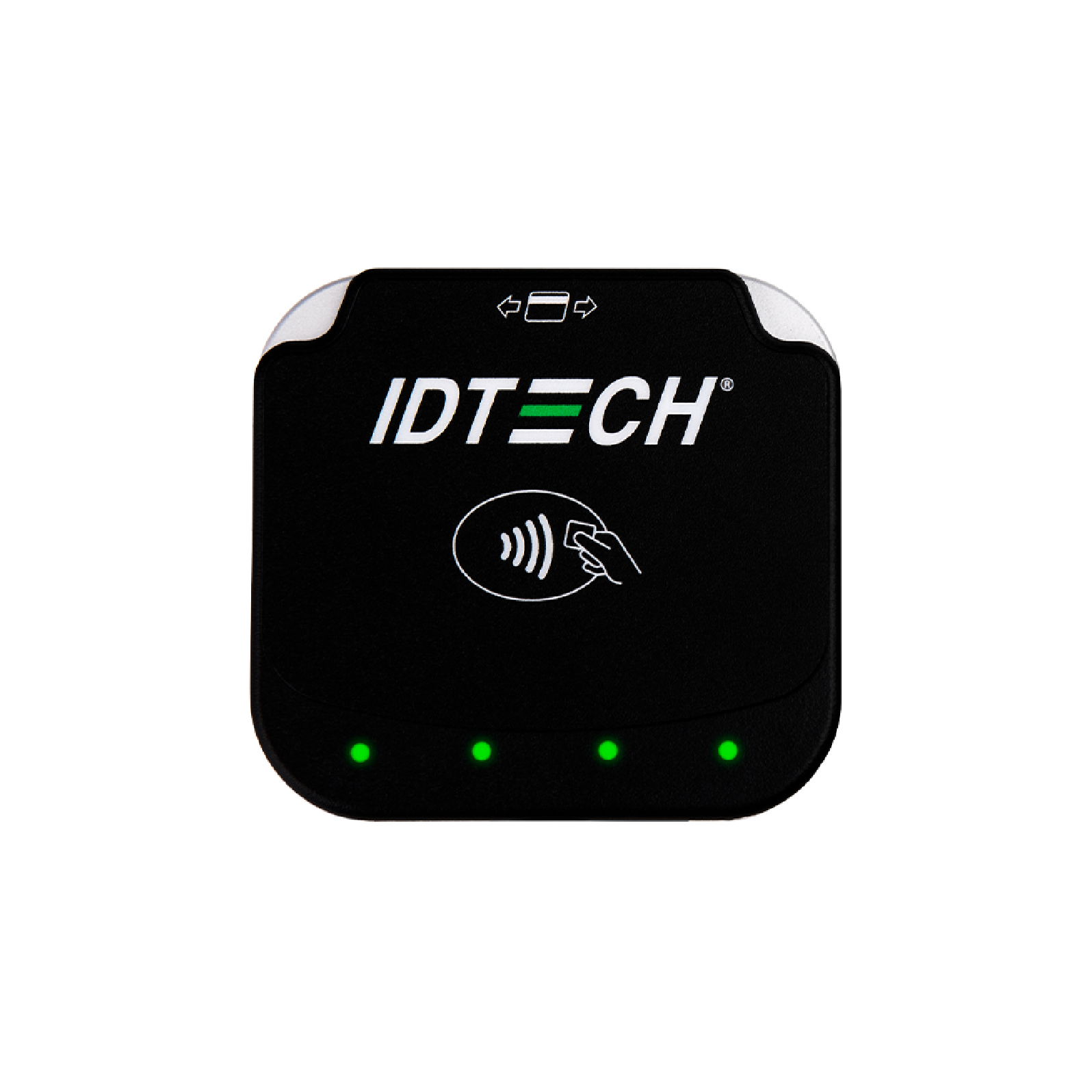
In the dynamic world of business, efficient payment solutions are essential. Payment devices—ranging from full payment terminals to customer-facing PIN pads and mobile card readers—play distinct roles in simplifying checkout and enhancing customer satisfaction. At DCCSupply, we recognize the importance of reliable, correctly specified payment systems and offer a wide range of affordable, high-quality devices to meet the needs of businesses of all sizes.
We'll delve into the evolution of card-present technology, clarify the difference between payment terminals, PIN pads, and consumer-level card readers, compare traditional magstripe “credit card machine swipe” workflows with modern EMV and contactless acceptance, and highlight key features to consider when choosing devices. We’ll also discuss emerging trends in payment technology. Let’s explore how the right mix of solutions can streamline your business operations.
Evolution and Understanding of Card Readers
The journey of card-present payments has moved from magstripe and imprint slips to today’s EMV chip and contactless experiences. It’s important to use accurate terminology because each device type serves a different purpose in the payment flow. A reader or PIN pad captures and encrypts card data; the processor/acquirer and associated networks move funds and settle transactions.
- Payment Terminal (the complete device):
- Standalone device that connects directly to a processor/acquirer.
- Handles card reading (magstripe, chip, contactless), PIN entry, and encryption—and often receipt printing.
- Examples: Ingenico Desk series, PAX A920 models, Dejavoo countertop terminals.
- PIN Pad (customer-facing input device):
- Not a standalone terminal; connects to a POS system.
- Reads cards, captures PIN, encrypts data; relies on POS software to complete the transaction.
- Examples: Ingenico Lane 3000, PAX customer-facing PIN pads, Dejavoo P-series.
- Card Reader (broad, consumer-level term):
- Often refers to mobile dongles and compact devices paired with phones/tablets (e.g., Clover Go 3 reader) or USB devices (VP3350).
- Typically depends on an app or POS software and a gateway/processor to complete transactions.
- Efficiency: Speeds up checkout, reduces wait times, and increases throughput.
- Cost-effectiveness: Streamlines workflows and can reduce operational overhead.
- Security: Modern devices support robust encryption and fraud-prevention features.
Whether you're a small business or a large enterprise, selecting the right device type—and pairing it with the appropriate processor/acquirer—can significantly enhance your payment processes and deliver a seamless experience for customers.
Credit Card Machine Swipe: Traditional vs. Modern
Payment technology has transformed card-present transactions. Traditional magstripe-only “credit card machine swipe” flows have given way to EMV chip and contactless acceptance on modern payment terminals and POS-connected PIN pads. Here’s how they compare:
- Traditional (Magstripe-Centric) Devices:
- Require physical swiping through a magnetic stripe reader.
- Often involve more manual steps and offer limited authentication.
- Lower security compared to EMV and contactless alternatives.
- Modern EMV/NFC-Capable Devices:
- Faster, more secure processing with chip and contactless (tap-to-pay) technology.
- Enhanced security through strong encryption and EMV liability protections.
- Better user experience with intuitive, customer-facing interfaces.
Modern payment terminals and compatible PIN pads offer significant advantages in speed, security, and user satisfaction, making them ideal for businesses aiming to streamline payment processes. Explore our range of terminals for the right solution.
Contactless Payment Machines: The Future of Transactions
Contactless acceptance is reshaping in-person payments, offering a faster, cleaner checkout. These devices communicate via Near Field Communication (NFC) with cards and mobile wallets. When a customer taps near the reader, the device captures and encrypts payment data, then transmits it through the processor/acquirer for authorization.
Because the device is initiating a secure, short-range exchange, the transaction often completes in seconds.
Adopting contactless payment systems offers several benefits:
- Speed: Checkout is completed rapidly, reducing lines and wait times.
- Convenience: No card insertion; for low-value transactions, additional verification may not be required. For higher amounts, a PIN or other verification may apply per network rules.
- Hygiene: Minimizes physical contact, supporting health and safety.
- Security: Advanced encryption and EMV contactless standards help protect cardholder data.
Contactless-enabled payment terminals pave the way for efficient and customer-friendly transactions. Businesses aiming to stay ahead should consider integrating this technology. Check out our wireless terminals for more options.
Best Card Payment Machines: Features to Consider
Choosing the right hardware depends on your environment (countertop terminal, POS with PIN pad, or mobile reader) and how you connect to your processor/acquirer. Key features to evaluate include:
- Security: Prioritize devices that support strong encryption and EMV; consider features like tokenization and PCI-validated solutions where applicable.
- Ease of Use: Clear prompts, responsive touch/key entry, and customer-friendly screens reduce errors and speed lines.
- Compatibility: Ensure support for magstripe, EMV chip, and contactless, and confirm compatibility with your POS software, gateway, and processor.
- Speed: Fast transaction handling and reliable connectivity are essential for high-volume operations.
- Portability: For mobile or field sales, compact card readers are ideal. The Clover Go Contactless Card Reader pairs with a smartphone/tablet and relies on an app/gateway rather than operating as a standalone terminal.
Aligning device capabilities with your business workflow—and the requirements of your POS and processor—ensures a smooth, secure payment experience and operational efficiency.
Emerging Trends in Payment Technology
Payment technology continues to evolve, and staying informed helps you maintain a competitive edge. Key trends include:
- Mobile Wallets: Tap-to-pay via phones and wearables continues to grow, driven by convenience.
- Biometric Authentication: Fingerprint and facial recognition improve cardholder verification in select use cases.
- Blockchain Technology: Explored for enhanced security and transparency in financial workflows.
- AI and Machine Learning: Powering fraud detection, chargeback mitigation, and smarter customer support.
By adopting relevant innovations, businesses can improve payment processes and enhance customer satisfaction. At DCCSupply, we offer products that incorporate the latest advancements. Explore our offerings at DCCSupply.
Conclusion and Next Steps
In today's fast-paced business world, choosing the right mix of payment terminals, POS-connected PIN pads, and mobile card readers is essential. These devices capture and protect card data at the point of interaction, while your processor/acquirer handles authorization, settlement, and movement of funds.
To stay competitive, select hardware that aligns with your environment and customer preferences. Consider security, ease of use, compatibility, and connectivity. Monitoring emerging trends can also help future-proof your operations.
At DCCSupply, we are committed to providing affordable, high-quality payment solutions. Whether you're looking for wireless devices or encrypted solutions, our products are designed to enhance your operations. For more information, visit DCCSupply.