
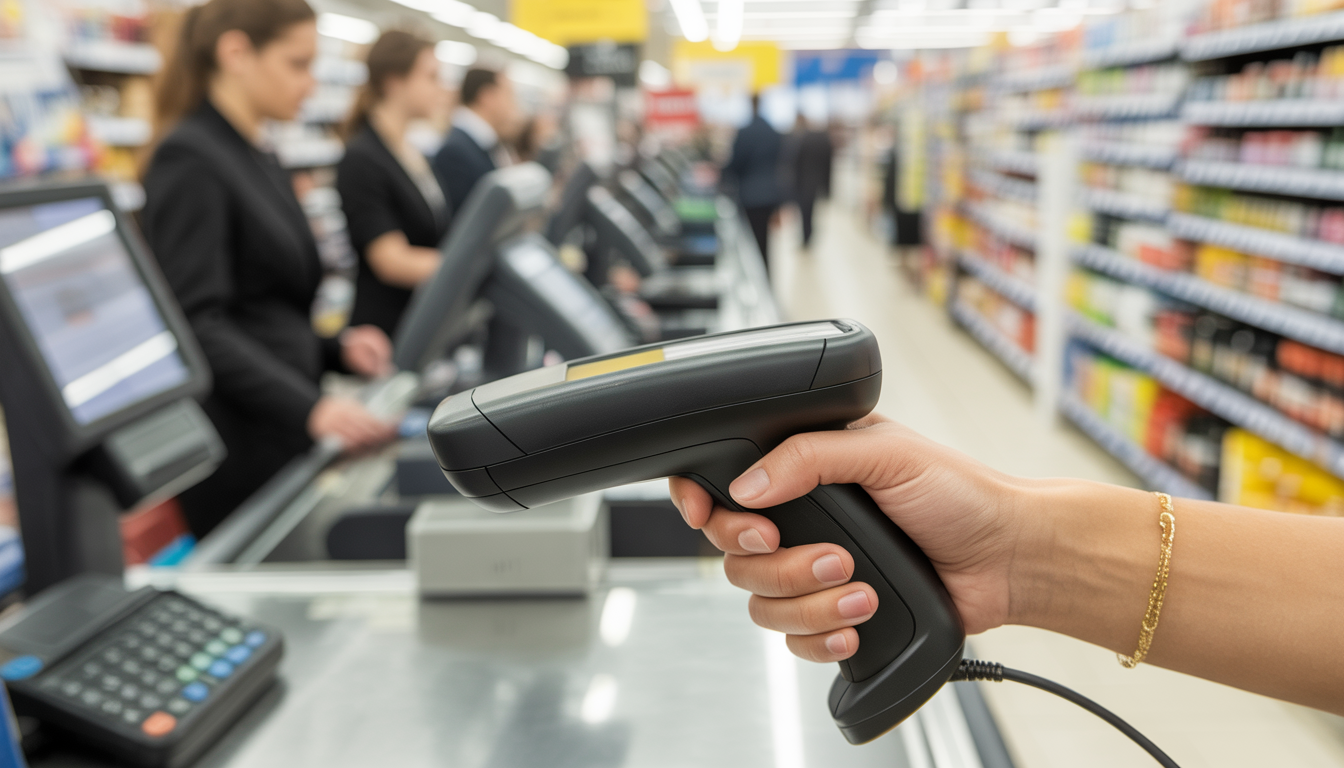
In today's fast-paced retail world, having the right barcode scanner for your store is crucial. These devices streamline operations, enhance customer service, and are essential for efficient store management. Whether it's speeding up checkout or improving inventory tracking, barcode scanners are indispensable tools for retailers.
This guide will walk you through the essentials of barcode scanners, covering their types and uses. We'll explore:
- The functionality and benefits of barcode scanners
- Types of barcode scanners suitable for retail environments
- Factors to consider when choosing a scanner for various settings
- Specific models and their advantages
- Connectivity options and future trends in barcode scanning
- Key features to look for when purchasing a barcode scanner
Understanding Barcode Scanners
Barcode scanners read and decode barcodes—patterns that store information. These devices are vital for retail operations, allowing quick and accurate data entry. By scanning barcodes, stores can efficiently manage inventory, track sales, and enhance the checkout experience.
For a deeper understanding of barcode systems, visit What Is a Barcode? How Barcodes Work, Benefits, and Uses. This resource offers insights into how barcodes improve efficiency.
- Improved accuracy in inventory management
- Faster checkout times, boosting customer satisfaction
- Reduced human error in data entry
- Efficient tracking of sales and stock levels
Types of Barcode Scanners for Stores
Consider these common types of barcode scanners:
- Handheld Scanners: Portable and user-friendly, ideal for retail. They're perfect for checkout counters or stocktaking. The Honeywell 7580g Hands-Free Barcode Scanner is a reliable choice.
- Fixed Scanners: Mounted in one spot, these are great for high-volume scanning, like in grocery stores or warehouses. The Star Presentation Barcode Scanner is a solid example.
- Wireless Scanners: Offering mobility, they're excellent for large stores or warehouses. The Socket Mobile Barcode Scanner and Charging Cradle Combo is a top pick for wireless needs.
Each type has its pros and cons. Handheld scanners are versatile but may not suit high-speed tasks. Fixed scanners handle volume well but lack mobility. Wireless scanners offer freedom but need regular charging.
Choosing a Barcode Scanner for Different Environments
When selecting a barcode scanner, consider the environment:
- Warehouses: Opt for scanners with long-range capabilities and durability to handle tough conditions. Reliable connectivity is key for seamless data transfer. To further enhance performance, DCCSupply offers the Universal Wireless Payment Pouch II with sling waistbelt and rugged metal belt clip, which securely holds a scanner, phone, and box cutter for hands-free efficiency.
- Shops: Choose scanners that integrate easily with point-of-sale systems. Quick scanning speed and ease of use are crucial for customer service. The Zebra Symbol DS9208 Barcode Scanner is a compatible option for retail settings.
For historical context, explore The History of the Bar Code.
Specific Scanner Models and Their Benefits
When choosing a barcode scanner, consider models that offer specific benefits:
- Handheld Symbol Scanners: Known for ease of use and portability, ideal for retail where mobility is crucial.
- Bluetooth Scanners from Zebra: These offer wireless connectivity, perfect for large spaces or warehouses, enhancing efficiency by allowing free movement.
Connectivity Options and Trends in Barcode Scanning
In retail, connectivity options are crucial for a barcode scanner's performance. Scanners with WiFi offer significant benefits, such as real-time data access and improved inventory management.
- WiFi Connectivity: Enables direct data transmission to a central system, ensuring immediate inventory updates.
- Future Trends: According to The Future of Barcode Scanning Technology: Trends from Zebra, upcoming trends include AI and machine learning integration to enhance accuracy and speed.
Staying updated with these trends helps businesses leverage the latest technology to maintain a competitive edge.
Key Features to Look for in a Barcode Scanner
When selecting a barcode scanner, consider features that meet your business needs:
- Scanning Speed: Quick scanning improves checkout efficiency.
- Ease of Use: User-friendly interfaces require minimal training.
- Compatibility: Ensure smooth integration with existing systems.
- Durability: Important for environments where scanners may be dropped or handled roughly.
- Range: Choose a range suitable for your environment, whether a small shop or large warehouse.
- Connectivity Options: Bluetooth and WiFi offer flexibility and mobility.
Evaluate these features based on your specific environment's demands.
Final Thoughts and Recommendations
Selecting the right barcode scanner can significantly enhance store operations and customer service. By understanding the available types and considering key features like speed, ease of use, and connectivity, you can make an informed decision that suits your business needs.
Remember, the best scanner depends on your specific requirements. Whether you need a handheld symbol scanner or a Bluetooth scanner like those from Zebra, choosing the right model is key to optimizing operations.
Explore DCCSupply's range of barcode scanners and accessories to find the perfect fit for your business. With a focus on affordability and quality, DCCSupply is committed to helping you streamline your payment processes and improve efficiency.