
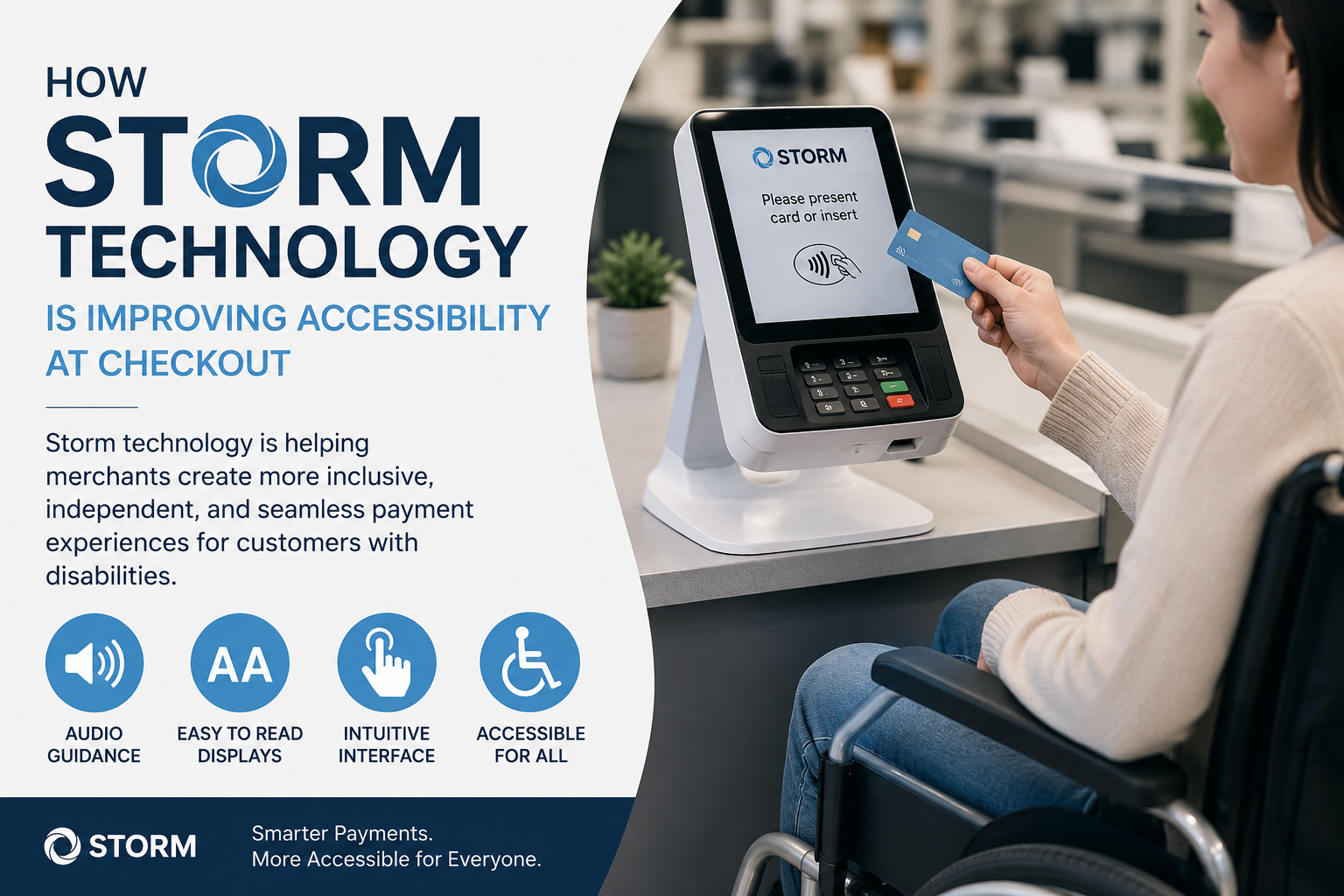
How Storm Technology Is Improving Accessibility at Checkout
As payment technology continues to evolve, accessibility is becoming an increasingly important part of the checkout experience. Companies like Storm Interface are helping lead this shift by developing technology designed to make transactions more inclusive and user-friendly for people with disabilities.
From retail stores and restaurants to transportation hubs and healthcare environments, accessible payment technology is helping create smoother, more independent checkout experiences for millions of consumers.
Why Accessibility in Payments Matters
For many customers with disabilities, the checkout process can still present challenges. Small touchscreens, difficult-to-read displays, poorly positioned payment terminals, and complex transaction flows can make completing a purchase frustrating or dependent on employee assistance.
Modern accessibility-focused payment technology aims to improve:
- Independence during checkout
- Screen readability and navigation
- Audio assistance and guidance
- Touchscreen usability
- Physical terminal accessibility
As self-checkout, kiosks, and unattended payments continue to grow, merchants are recognizing that accessibility is becoming a critical part of the customer experience.
What Is Storm Technology?
Storm Interface specializes in accessible interface technology used in payment systems, kiosks, ATMs, and self-service environments.
Their solutions focus on helping customers more easily interact with payment devices through features such as:
- Tactile navigation
- Audio guidance compatibility
- ADA-conscious hardware design
- Simplified user interfaces
- Durable keypad and touchscreen solutions
Storm technology is often integrated into self-service systems where accessibility, reliability, and ease of use are especially important.
The Growing Demand for Accessible Checkout Technology
Large merchants and restaurant brands including McDonald's, Target, Walmart, and Taco Bell are continuing to invest in more accessible self-checkout and payment environments.
This area is growing quickly due to:
- Increased self-checkout adoption
- Growth in kiosks and unattended retail
- Demand for more independent checkout experiences
- ADA accessibility expectations
- Pressure from consumers and advocacy groups
Several companies are helping advance this movement, including Vispero, TPGi, NCR Voyix, and Toshiba Global Commerce Solutions.
Accessibility Goes Beyond Software
Creating an accessible checkout environment also depends on the physical hardware setup.
From a DCCSupply perspective, this trend aligns closely with:
- Adjustable payment stands
- Mobile payment devices
- Accessible terminal placement
- Touchscreen usability
- Kiosk hardware
- Customer experience optimization
Proper terminal positioning and mounting solutions can significantly improve usability for customers with mobility or visual impairments while also creating a cleaner and more efficient checkout environment overall.
Looking Ahead
The future of payments is not just about speed and security. It is also about creating technology that works for everyone.
As self-service technology continues to expand, there will likely be increasing demand for hardware setups and payment environments that support accessible checkout experiences. Businesses that prioritize accessibility today are positioning themselves to better serve a broader range of customers tomorrow.
.